

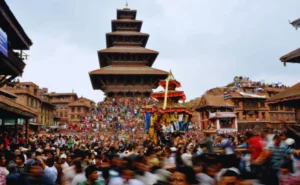
One of the liveliest festivals from Nepal, Bisket Jatra is celebrated mainly in Bhaktapur in April during the Nepali New Year. The signature chariot tug-of-war and colorful street festivities make it much more special than any other festivities. Bisket Jatra in Nepal, which is rooted in mythology, cultural rituals, and community pride, is a celebration that uncovers interesting secrets when you scratch a little deeper. Below are some lesser-known facts or surprising aspects of this age-old tradition.
Historical Significance

Bisket Jatra in Nepal has origins dating back centuries to the adoption of the Nepali calendar. Though it happens during New Year, Bisket Jatra is a commemoration of an ancient legend, not the calendar itself. This town, it is said, was once under the curse of a serpent, an ancient curse, until the gods heard the cries of the people, the people who pleaded for relief from the serpent, and sent them a hero to remove the threat of the serpent.
The Bisket Jatra in Nepal represents the vanquishing of evil and the coming of good fortune. The celebration enshrines the gods Bhairab and Bhadrakali, and the chariots on which they ride aren’t just symbolic; the chariots are spiritual vehicles believed to shower blessings upon the city. Over the centuries, kings, artisans, and common folk have built it into the great spectacle that it is today, keeping its core story but adapting it to more modern times.
As New Year 2082 comes close, Bisket Jatra has begun in Bhaktapur. Read more!
The Chariot Processions

One of the most exciting elements of Bisket Jatra in Nepal is the grand chariot procession. Using traditional methods, two massive wooden chariots are constructed each year, one for Lord Bhairab and another to carry the Goddess Bhadrakali. Local people pull the chariots through narrow, stone-paved streets with thick ropes in a sort of tug of war between the upper and lower halves of Bhaktapur.
What many don’t realize, however, is that the contest is much more than a test of strength; it’s a symbolic battle of pride, history, and territorial honor. There’s local pride at stake in the tug-of-war competition, so each neighborhood takes pains to gear up for it beforehand. It is raw, unscripted drama that envelops entire communities.
Lesser-Known Cultural Practices

Many sacred rituals continue behind the scenes, in addition to the public festivities. For example, one of the preliminary rites before the procession of the chariots is the Vedic Tantric rituals where priests invoke the deities into the chariots. The divine idols are ceremonially installed at the temple, an intricate process that reverberates their energy throughout the festival.
Locals also perform smaller, community-specific traditions like lighting oil lamps, cooking specific foods, and making ancestral offerings that evoke their roots. Some also have generational roles, like musicians, chariot keepers, or ritual dancers.
Role of Young Participants
Young people are essential to the celebration of Bisket Jatra in Nepal, not just as excited participants but as custodians of tradition. From hauling the gigantic chariots to joining the human chains that meander down narrow alleyways, they are heavily involved and much needed. Exchange programs are risky, a physical challenge, and supposedly a tradition and a rite of passage, enticing to the youth.
In some places, the teens and young adults start getting mentally and physically prepared weeks in advance. They take the music, dance, and oral traditions of the Jatra with them, too, ensuring the spirit of their time-honored performances courses through an ever-changing society.
The Danger and Safety Measures
With excitement comes danger. The chariot pulling is usually chaos, and injuries are not uncommon due to the massive wooden wheels and dense crowds. There have been injuries in the past to both spectators and competitors, as well as some fatal accidents.
But recent years have seen cooperation between local authorities and community leaders to enhance safety. Controlled rope-pulling zones, improved communication between volunteers, medical assistance posts, and even the use of drones to monitor the situation have all helped make a huge difference. Walking the line between tradition and safety remains a work in progress, but awareness is increasing.
The Bisket Jatra in Nepal is so much more than a colorful New Year celebration; it’s a richly layered cultural phenomenon that captures the history, mythology, and character of Bhaktapur. From its dramatic chariot processions and sacred rituals to the passionate involvement of youth and evolving safety measures, the Bisket Jatra in Nepal narrates a rich tale of resilience, community, and living tradition. While its public spectacles grab the attention, it’s the lesser-known customs and personal roles that are handed down from generation to generation that put the soul into the Bisket Jatra in Nepal. On the surface, it may appear to be just one of many festivals, but peel back its layers, and you will uncover a vibrant cultural pulse that does not show signs of slowing down.
FAQs on Things you don’t know about Bisket Jatra
Which god is worshipped at Bisket Jatra?
Bhairab and Bhadrakali are worshiped in their respective chariots in the Bhairab temple in Taumadi Tole in Bhaktapur amid various special tantric rituals.
Which is the biggest jatra of Bhaktapur?
Biska Jatra stands as one of Bhaktapur’s most revered festivals, embodying significant cultural and historical value.
Which king made Bhaktapur Durbar Square?
The Durbar was originally built in 1427 A.D. by King Yakshya Malla.
Who was the last king of Bhaktapur?
The last king of Bhaktapur (also known as Bhadgaon) was Ranajit Malla, who ruled from 1722 to 1769.